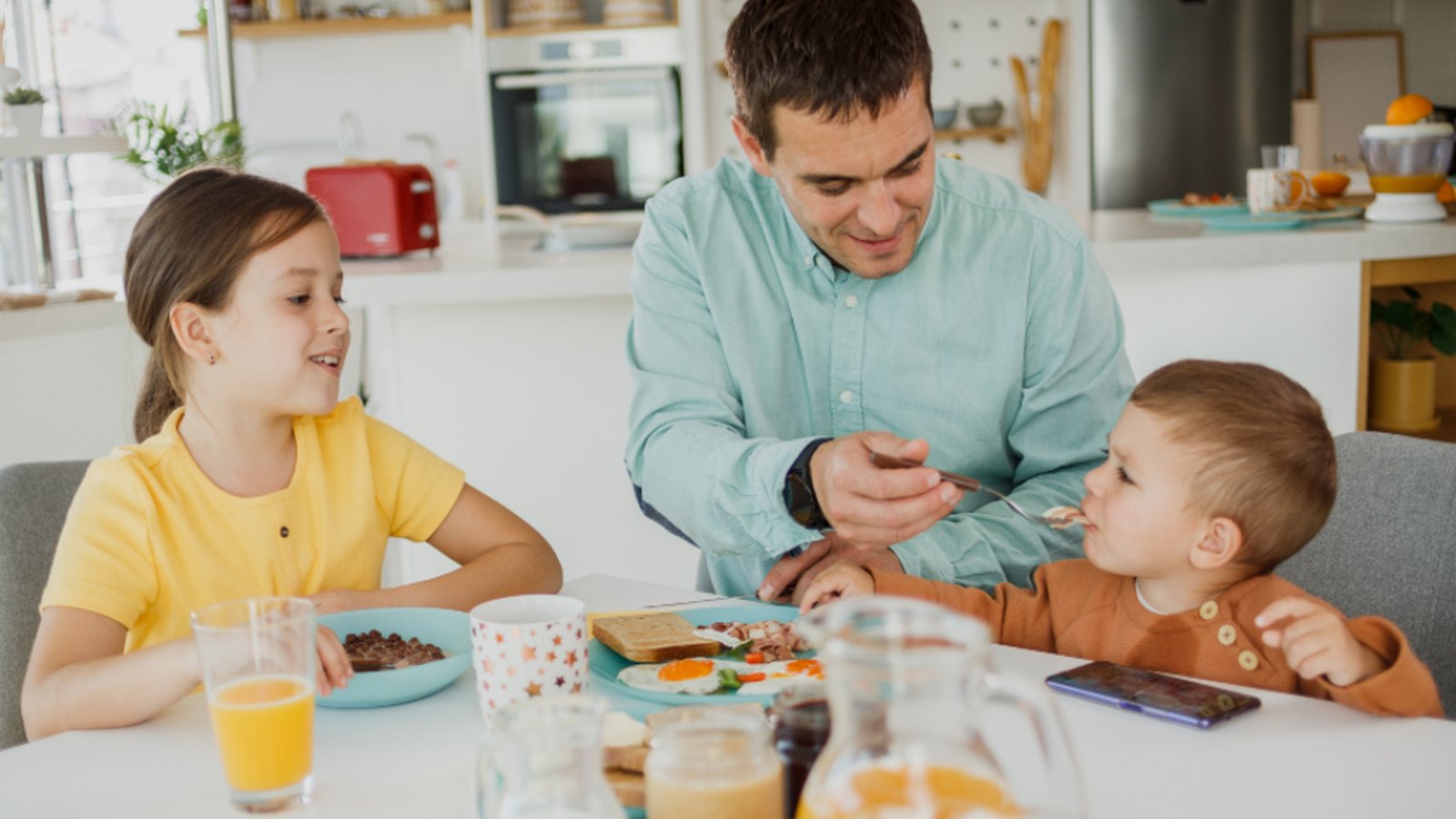




“At nursery she eats everything, at home nothing.” We hear this so often that it is almost a rule. The explanation isn’t in the food, and it isn’t in you.
Why children eat more at nursery
- The group. Children eat because other children are eating. That is the strongest factor and it cannot be recreated at home.
- A fixed timetable. Meals happen at the same hour every day, so a child comes to the table genuinely hungry.
- No negotiation. The staff don’t coax and don’t offer an alternative. The food is in front of the child, and the child decides.
- Less emotional weight. How much a child eats doesn’t matter to a nursery worker in the way it matters to you.
That last point is the hardest to hear and the most useful to know: your child senses your worry and responds to it.
What is worth bringing home
- Fixed mealtimes. The same hour every day, weekends included as far as that is workable.
- The same place. Your child eats at the table, not in front of the television and not on the floor.
- The same tableware. A recognisable plate is part of the routine for a toddler, not a detail.
- No alternative on offer. If they don’t eat the meal, the next one comes at the scheduled time.
- No commentary about quantity. Don’t count spoonfuls and don’t mention what is left.
What not to try to copy
- The menu. A nursery menu is built for a group and tells you nothing about what to cook at home.
- The quantities. A child who ate lunch at nursery won’t eat the same amount in the evening.
- The discipline. At home your child is more relaxed and more demanding, because home is safe. That is a good thing, not a bad one.
Going back after the weekend
Monday is often the worst day, because the weekend broke the rhythm. What helps:
- On Sunday evening, go back to the nursery mealtime schedule.
- Make Sunday dinner simple and familiar, not a special meal.
- On Monday morning, don’t introduce anything new.
A packed snack
If your child needs a snack for nursery or childcare, one practical note applies: tableware that leaves the house has to survive the machine and careless handling. Bamboo won’t take that, so for this we recommend silicone or plastic — the reasons are in the comparison of materials.
Bamboo tableware stays at home, where washing is under your control. That split — silicone for out, bamboo for home — is the most practical arrangement we see among our customers.
When the difference isn’t a phase
If your child isn’t eating at nursery either, is losing weight, or is avoiding whole food groups, this is no longer a question of routine. Talk to the nursery staff and to your paediatrician — the difference between a phase and a problem is covered in the piece on fussy eating.