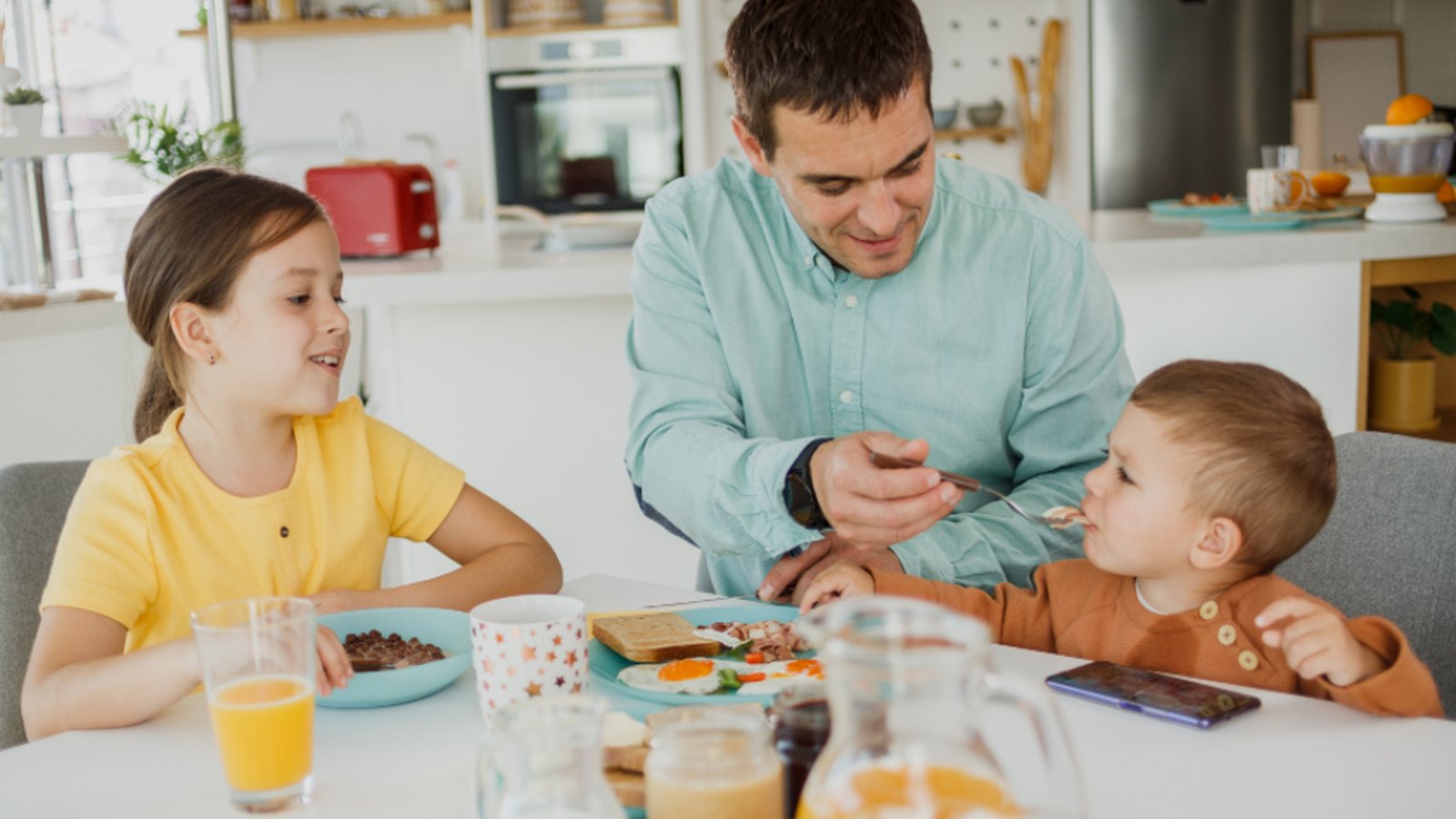



We sell bamboo tableware, so it is only fair to say this first: we are not impartial. That is why this comparison is written so that you will also find reasons not to buy our product in some situations.
Weight and stability
This is the one property parents mention at every meal. Light tableware moves; heavier tableware stays put.
- Bamboo: the heaviest of the three. The plate has a mass that reduces sliding on its own, even without a suction base.
- Silicone: light, but it grips a smooth surface well. The whole plate is often a single piece of silicone with a suction base.
- Plastic: the lightest and the most prone to sliding. Without a suction base it moves at every touch.
In practice: bamboo and silicone are comparable on stability, plastic lags behind.
Warmth and feel
Bamboo is a poor conductor of heat, which means warm food cools down more slowly in it and the rim of the plate stays pleasant to touch. Silicone behaves similarly. Plastic heats up faster and cools down faster.
For a child another aspect matters more: bamboo has a feel to it. It isn’t smoothly cold like plastic and it isn’t softly rubbery like silicone. Many children who are sensitive to textures get on more easily with wood.
Durability and care
Bamboo
It dislikes soaking, dishwashers and microwaves. In return it lasts for years, as long as you wash and dry it right after the meal. Detailed instructions are in the piece on caring for bamboo.
Silicone
The most forgiving of careless use: dishwasher, steriliser, drops. Over time it takes on smells and grease, which shows on light colours.
Plastic
It survives almost anything, but it scratches and fades. The scratches are a chapter of their own: food residue collects in them.
Cost over two years
The price of a single item tells you little. What is more interesting is how many times you replace it.
- Plastic: the lowest starting price, but replaced most often because of scratches and fading.
- Silicone: mid-range price, long life, replaced mainly because of smells.
- Bamboo: the highest starting price; lasts a long time if handled correctly, cracks if not.
Honestly: if you know the tableware will end up in the dishwasher, because your day doesn’t work any other way, buy silicone. Bamboo will not survive a dishwasher and the money will be wasted.
Looks and the table
This isn’t trivial. Bamboo tableware is the only one of the three that parents leave on the table even when their child isn’t eating. It sounds like a side issue, but it means the tableware is always to hand and that your child’s meal isn’t visually separated from the family’s.
When bamboo isn’t the right choice
- When you can’t wash it by hand. No exceptions — this is the single biggest source of disappointment.
- For nursery or childcare. There it goes in the machine; send silicone or plastic.
- For a child who regularly throws tableware off the high chair. Bamboo can crack; in that phase silicone is more practical. When the phase passes, come back to bamboo — more about the phase in the piece on throwing food.
- For the microwave. Bamboo does not belong in one.
The short version
- Bamboo: the best looking, the most stable, the most demanding to care for. For home and hand washing.
- Silicone: the most robust and the most practical. For nursery, travel and the throwing phase.
- Plastic: the cheapest, the least durable. For a spare and for one-off occasions.
If you want to know what the law says about materials and what the labels on the packaging actually mean, carry on with BPA, melamine and what is allowed in the EU.