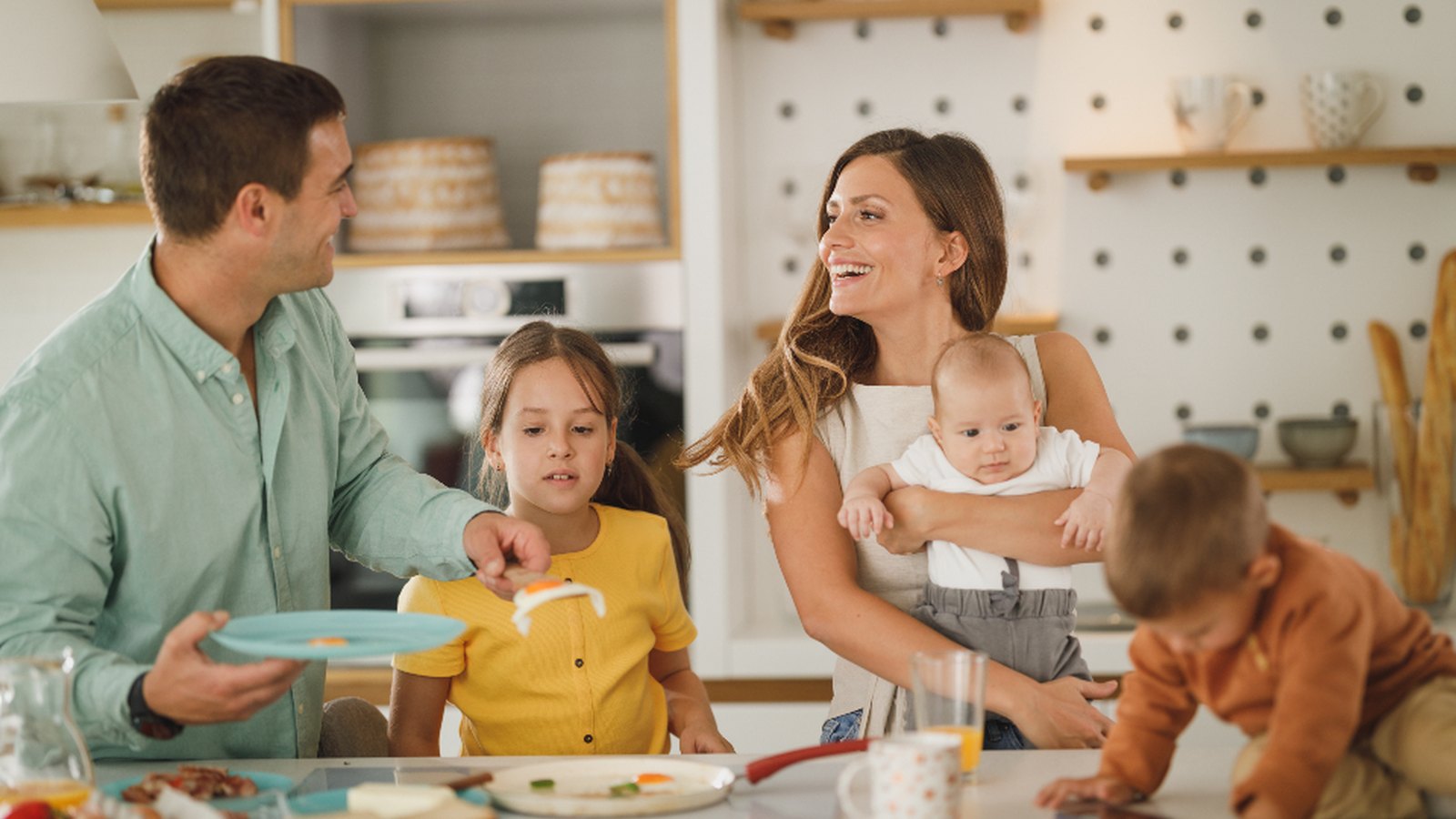



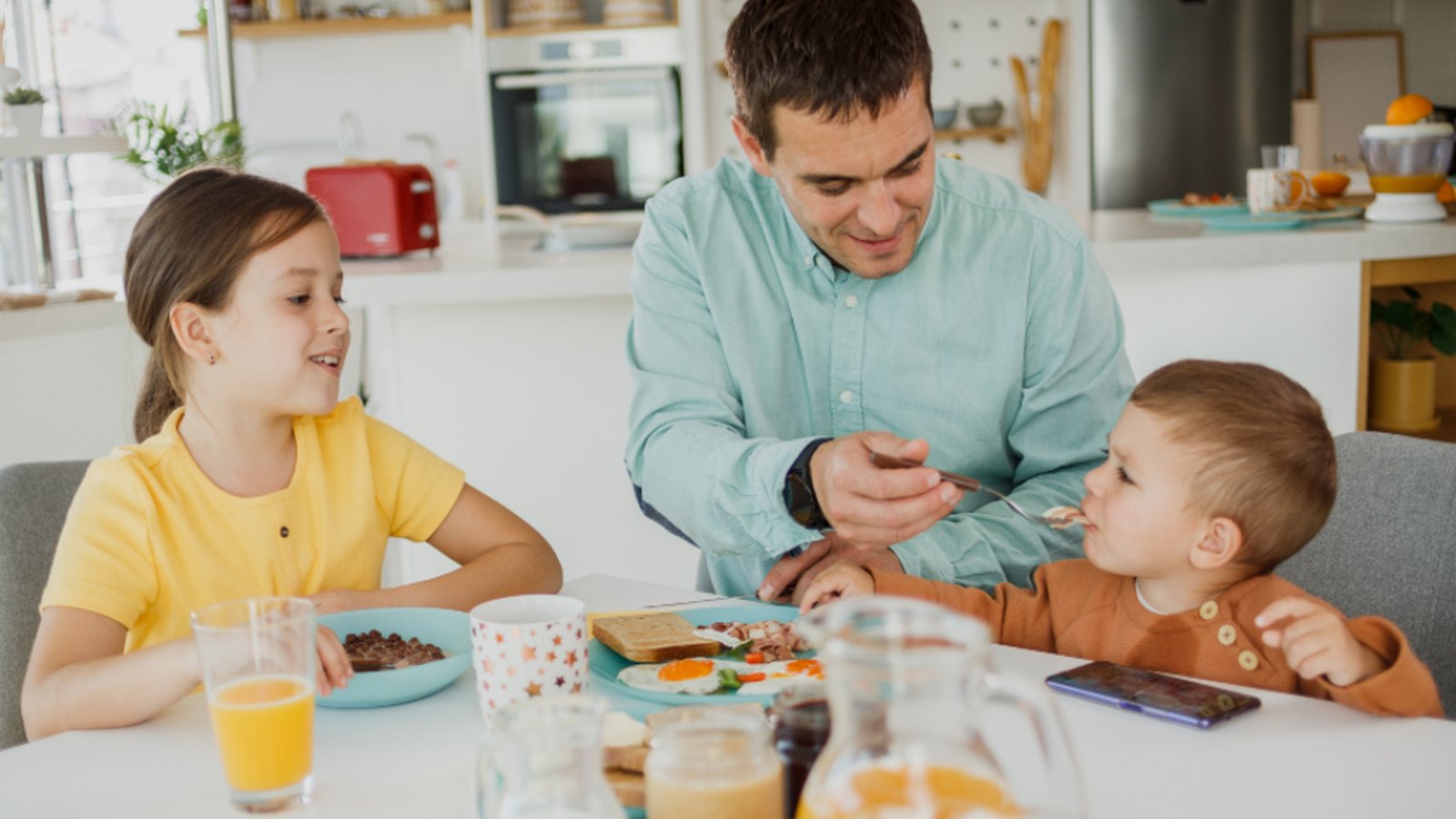
We picture the first meal at the table as a photograph: child in the high chair, spoon in mouth, everyone smiling. In reality it looks more like an experiment — the child prods, squeezes, turns the plate over and watches what happens. That isn’t failure. That is exactly what is supposed to be going on.
If it feels like you are clearing up more than you are feeding, you are on the right track. In this piece we go through what actually decides whether a meal is pleasant: where your child sits, what is in front of them, and how you react when the plate ends up on the floor.
Why the first meal isn’t about food at all
At six months a child still gets almost all their energy from milk. The first meals are not there to fill them up — they are there so the child can learn several completely new things at once: sitting upright, gripping an object, bringing it to their mouth, coping with a new taste and a new texture, and watching what everyone else at the table is doing.
That is an enormous amount of work for a small person. So it makes sense to measure success differently from how we are used to. The question isn’t “how much did they eat”, it is “was the meal calm, and did they try anything”.
A practical measure for the first few weeks: the meal worked if your child sat at the table, touched the food, and nobody got tense. The quantity comes on its own, later.
Where your child should sit
Body position affects a meal more than most parents expect. A child hanging back in an oversized high chair, with nowhere to rest their feet, cannot concentrate on food — all their attention goes into staying upright.
Three things to check on the high chair
- Hips, knees and ankles at right angles. The feet need support — a footplate, a stool, anything. Dangling feet mean restless sitting.
- Back supported, not slumped. If your child slides to one side, the chair is too big. A rolled towel at the hip is a perfectly legitimate fix.
- Table at chest height, not chin height. A tray that is too high means working with the hands above the shoulders, which gets tiring fast.
Once a child is stably positioned, a good many “feeding problems” quietly solve themselves.
What to put on the table
The first mistake we all make is too much. We fill the plate because it feels sad to set down two spoonfuls of food in front of a child. Faced with a full plate, the child does the only logical thing: starts emptying it — by hand, onto the floor.
- One or two foods at a time. More choice doesn’t mean more eaten, it means more shuffling about.
- Small amounts, topped up often. Two spoonfuls on the plate, more from a bowl at your side.
- Pieces your child can grip. For first meals that means elongated pieces, long enough to stick out of a fist.
- Something familiar next to something new. A food they already know lowers the tension around a new taste.
If you are wondering whether to start with purées or with finger food, we wrote a whole piece about it: BLW or purées — an honest look.
Why a stable plate matters more than it seems
A plate that moves is, to a child, mainly a toy. Every time they push it and it shifts, that is an interesting result — and they will repeat it. A plate that doesn’t move stops being interesting after a few attempts, and the child goes back to the food.
That is the entire reason we have a suction base. It isn’t about stopping a child doing something; it is about removing one thing that drags the meal out for no reason. How the suction base works and when it lets go, we explained in how the suction base works.
Once the plate stays on the table, the meal takes half as long. We hear this from parents more often than anything else.
from our customers’ feedback
When the food ends up on the floor anyway
It will. Almost certainly. The first throw isn’t defiance — the child is testing cause and effect, and your reaction is part of the experiment. If you laugh, that is a reward. If you get cross, that is an even bigger reward, because the reaction is stronger.
The most boring possible reaction is the best one: pick it up calmly, say nothing. If the throwing happens three times in a row, the meal is over — no resentment, no lecture. Within a few weeks the child learns that throwing means the end, not a performance. We went into this in more detail in why children throw food on the floor.
The routine worth setting up straight away
Children get used to meals through repetition, not through explanation. So it is worth putting a few fixed points in place from the start — ones you won’t change later:
- The same place and the same chair, even when the meal is short.
- Washing hands as the signal that the meal is beginning.
- The plate comes to the table once your child is already sitting — not before.
- The meal ends when your child stops eating, not when the plate is empty.
Four habits you set in the first month keep working for the next two years.
What you need for the first meal
Less than you are sold. To begin with, a stable high chair with a footrest, one plate or bowl that doesn’t move, a soft spoon and a mat under the chair are enough. Everything else can wait until it turns out you actually need it — more on that in what you buy for your first child and not for your second.
If you are choosing your first piece of tableware: at six months a suction bowl is the most useful, because it holds thicker food and your child can load the spoon against the rim. A plate with compartments comes into its own a few months later, once they start eating with their fingers.