



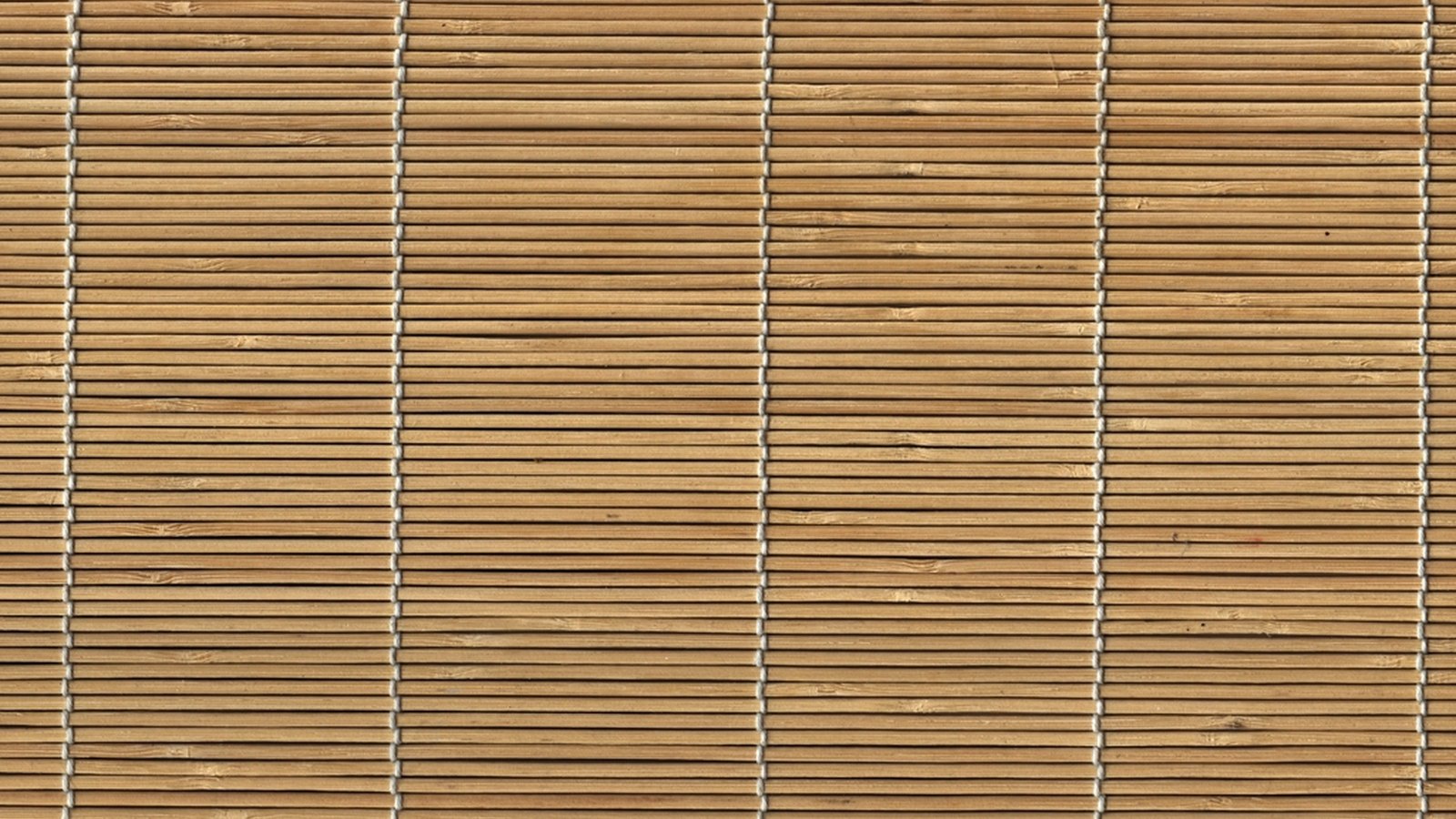
A bamboo plate looks like a single piece of wood. It isn’t — and the way it is made explains almost all its properties, including why it mustn’t go in the dishwasher.
Why bamboo and not wood
Bamboo isn’t a tree, it is a grass. Two properties follow from that, and both matter for tableware.
- Fast growth. Bamboo reaches a usable size in a few years rather than decades, and after cutting it regrows from the same root system — with no replanting.
- Hardness at low weight. Bamboo fibres run lengthwise and are dense, giving a material that is strong but not too heavy for a child’s plate.
The drawback comes from the same structure: lengthwise fibres absorb water. That is why all bamboo care is really moisture management — as described here.
From stem to board
A bamboo stem is hollow, so you cannot cut a plate out of it. The process is therefore different:
- Cutting into strips. The stem is cut lengthwise into narrow battens.
- Boiling or drying. The material is treated to remove sugars and lower the moisture content — this is the step that prevents the wood moving later and stops mould taking hold.
- Gluing and pressing. The battens are stacked and bonded under pressure into a board. The adhesive has to be suitable for food contact.
Because of this construction the plate has a visible striped grain. If a bamboo product is completely uniform and brightly coloured, it is generally not solid bamboo but a composite with melamine resin — the difference is explained in the piece on materials.
Shaping and sanding
The plate is cut from the board and shaped: the compartments, the rounded edges and the ears or outlines that make the tableware recognisable. Then comes sanding — coarse first, then fine.
Rounded edges aren’t only about looks. In wood, sharp edges are the places where fibres lift first and where a plate starts to fail.
The suction base
The silicone suction base is fitted separately and is removable. Being removable is deliberate: otherwise moisture collects underneath, and moisture is bamboo’s main enemy. How it works and when it lets go is covered in the piece on the suction base.
Why we don’t paint the surfaces
A coloured coating would be the easy answer — the plate would be more uniform and more stain-resistant. We decided otherwise, for three reasons:
- Fewer layers means fewer questions. Every additional coating is another material in contact with food.
- Wear is visible. On unpainted wood you spot a crack or a lifted fibre immediately — on painted wood you don’t. How to recognise the end of a plate’s life is here.
- Every plate is different. The grain is visible and no two pieces are the same. To us that is an advantage, not a flaw.
The practical consequence: foods that stain — carrot, tomato, turmeric — will leave a mark on unpainted bamboo. Most of it can be removed with lemon, as described in the piece on care.
What this means for you
To sum up the journey: pressed layers of wood, with no coloured coating, and a silicone suction base. Everything follows from that — the weight that keeps the plate in place, a look that ages, and a limitation we can’t get around: hand washing, no dishwasher and no microwave.
If that combination suits you, bamboo is an excellent choice. If it doesn’t, it is only fair to say there is a better one for you — the comparison of the three materials is here.