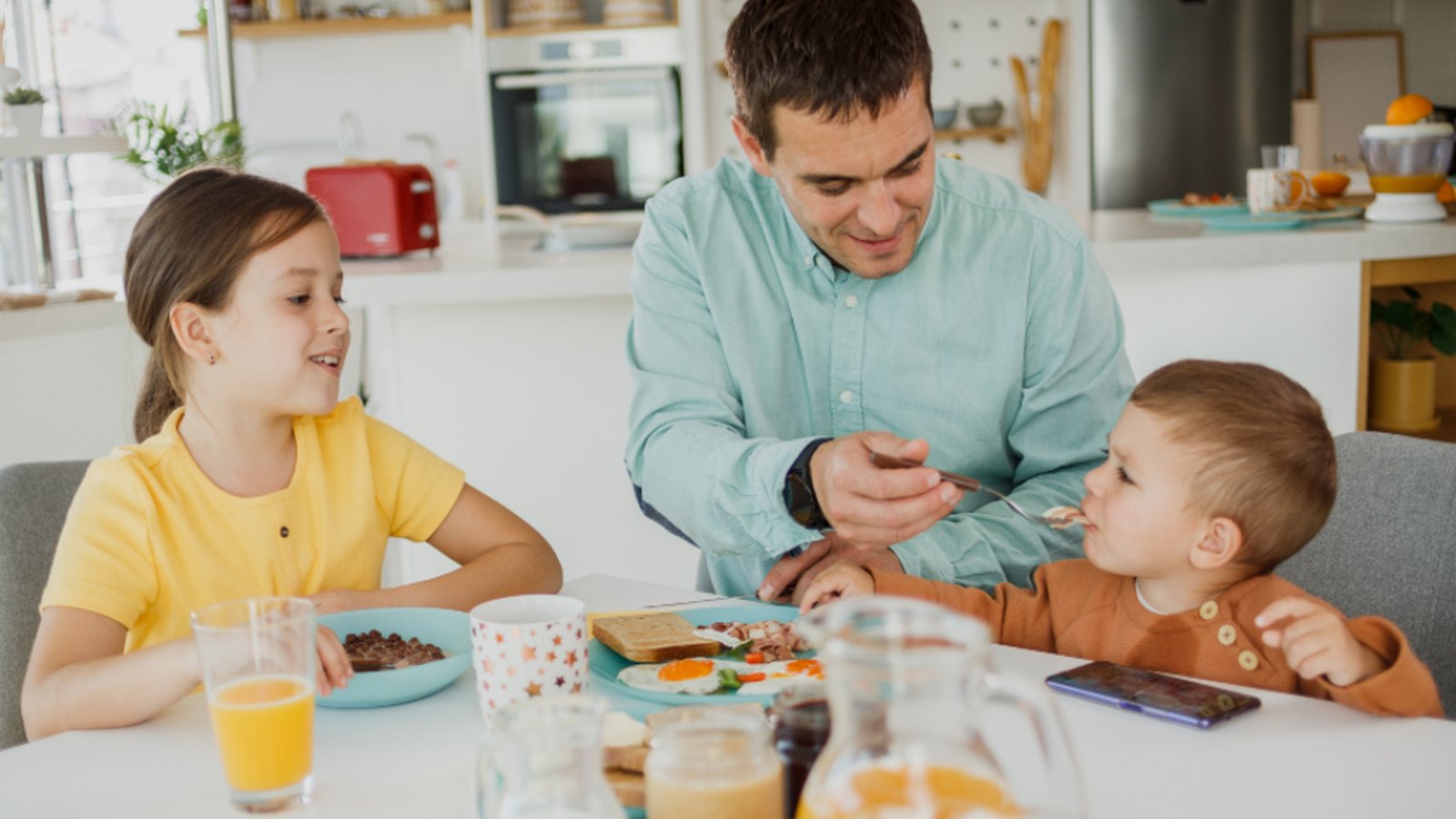



Morning is the hardest meal of the day, and the reason isn’t the food. Children are often less hungry first thing, and you have the least time. That combination makes breakfast the one meal where parents regularly feel defeated.
Why mornings don’t work
Three reasons we see in almost every family:
- Your child had milk in the night and isn’t hungry in the morning. That is physiology, not defiance.
- Time is short, which passes on a tension your child picks up before you do.
- Breakfast comes too soon after waking. Many children need twenty minutes before they can eat at all.
If you can, move breakfast twenty minutes later and put it after getting dressed rather than before. That is the cheapest change with the biggest effect.
Five breakfasts from the fridge
No cooking, assembled in three minutes:
- Curd cheese with banana and ground walnuts. Mash with a fork, no sugar.
- Wholemeal bread with avocado, cut into strips your child can grip.
- Natural yoghurt with soft fruit and a spoonful of oats for texture.
- A boiled egg and a piece of bread. Boil the eggs on Sunday for the whole week.
- Cheese, pear, walnut — three compartments, no preparation.
Five breakfasts you make the night before
- Overnight oats with milk and fruit; in the morning you just take them out of the fridge.
- Millet or spelt porridge, cooked in the evening, warmed through with a little milk.
- Sugar-free muffins with courgette or banana; freeze them and defrost one at a time.
- Two-ingredient pancakes (banana and egg), which your child will eat cold too.
- Cut fruit in a container — it seems obvious, but it saves five minutes exactly when you don’t have them.
How to lay out the plate so your child sits down
At the morning meal, form matters more than content. Three approaches that work:
- Compartments instead of one bowl. Your child can see how much food there is and that it isn’t touching. That lowers the initial resistance — more on that in the piece on fussy eating.
- Less food than you think. A full plate in the morning is off-putting. Two pieces, and more if needed.
- The same tableware every day. With toddlers, routine is stronger than the menu.
When breakfast really isn’t happening
Sometimes it doesn’t, and that is fine. A child who eats little in the morning makes up for it at mid-morning snack. What works on days like that:
- Offer a drink — milk or water — and a piece of fruit to take along.
- Don’t negotiate and don’t coax. Coaxing makes breakfast longer, not better.
- Put the food on the table and get on with your own breakfast. Children often start eating when nobody is watching.
How to keep a similar routine where your child eats without you is covered in the piece on lunch at nursery and at home.