



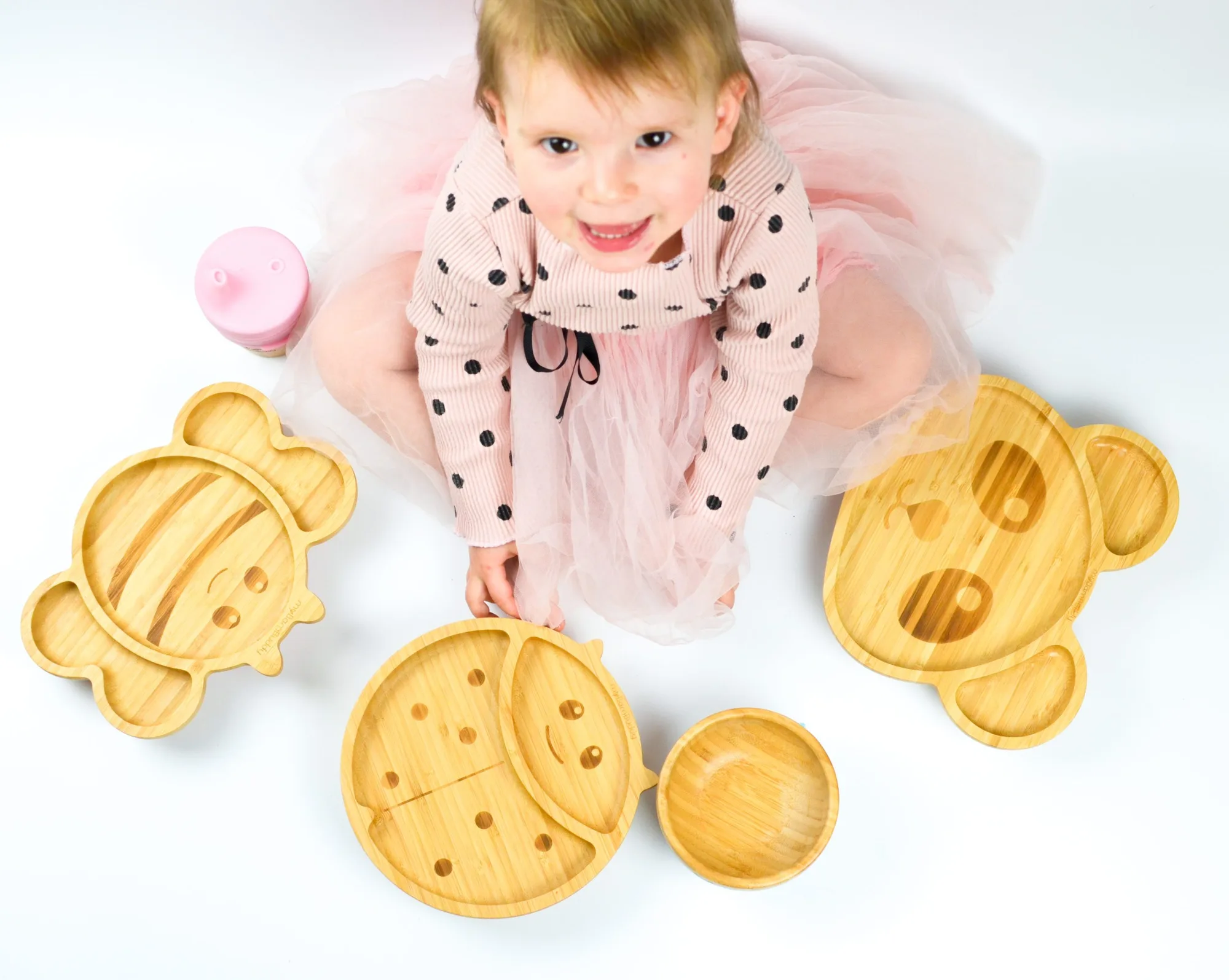
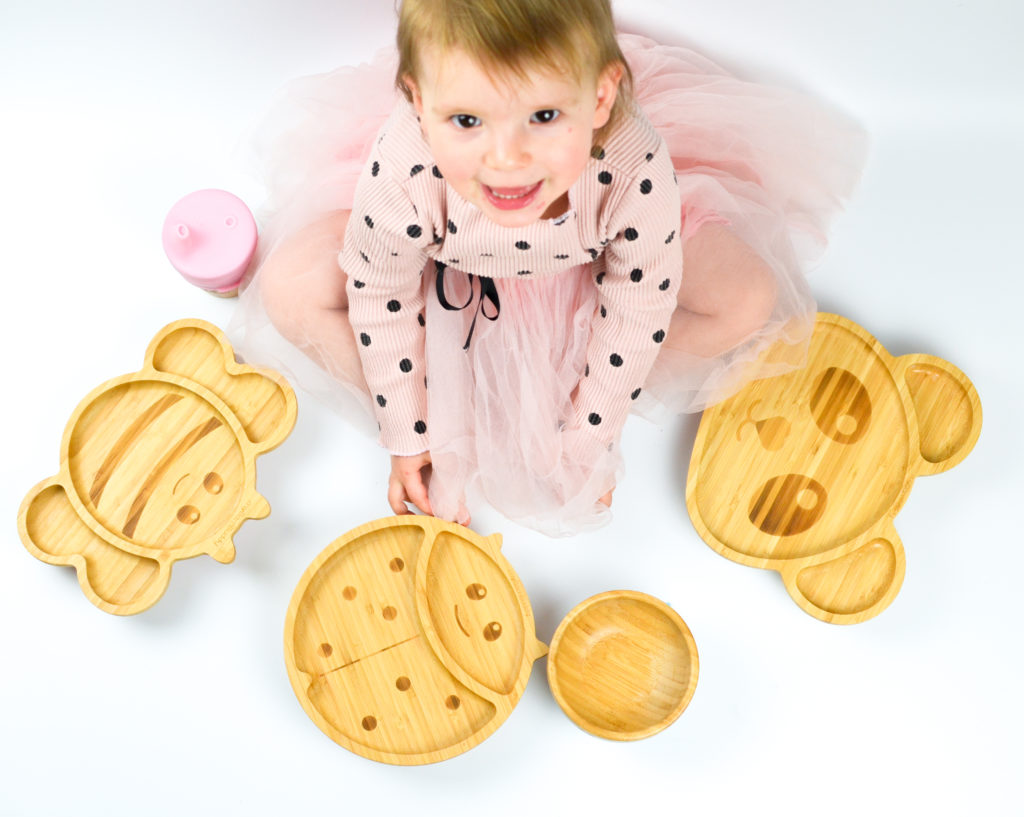
Introducing solid food to children, and buying the kit for it, can be as simple or as complicated as we make it. Some parents equip themselves with everything on the market and believe they wouldn’t survive weaning without all of it, while others are complete minimalists about it. The fact is that starting solids does NOT require every possible piece of equipment. BUT — whether you go the BLW route or use some other method, try to make sure the things you buy are good quality and that they encourage your child’s independence. As mothers we have a responsibility to share our experience with those just setting out, so I have gathered a few useful pointers to make starting solids go more smoothly.
1. A high chair
Whatever method you use, the most important thing is to find a chair that is ergonomic and puts your child in the optimal position for eating. There are quite a few chairs to choose from, but what matters is choosing one that helps your child to a more comfortable meal. Many chairs don’t encourage good posture and make children uncomfortable when sitting. That can make it hard for babies and toddlers to sit and concentrate on the meal.
What matters when choosing?
· An ergonomic shape that encourages good posture
· An adjustable footrest
· Easy to clean
· Can be pushed up to the table (once children grow a little)
· Quality of the materials
2. A bib
We can probably all agree that a bib is an ESSENTIAL item for every baby and toddler — whether you are doing BLW or not. You can’t start weaning without a good and, above all, practical bib, and in my experience the best kind is the one that is easiest to clean, so ideally made from a material that doesn’t soak through. It also matters that it covers as much as possible, because that saves you a good many extra loads of washing.
3. A spoon
When choosing a spoon, what matters most is that it is shaped for small hands and made from a material that is soft and cannot hurt your child (silicone, for instance).
4. A cup
With the flood of cups on the market it is sometimes hard to tell the good ones from the less suitable. There are several types:
· Sippy cup — a special kind of training cup that helps your child move from a bottle to a cup and prevents spills during that stage. It can have a hard or a soft spout.
· Straw cup — paediatric therapists and dentists usually recommend straw cups over sippy cups. Children can be taught to drink from a straw at a very early stage, which makes these suitable early on for some. Such cups, although more likely to leak when dropped, encourage proper oral development.
· Open cup — these demand rather more skill and are suitable for older children.
Here are the main points to consider when choosing cups for a baby or toddler:
· Is the cup for travel or for home? If you are looking for something for travel, consider a cup that doesn’t spill, has a lid and is durable. If it is for home use it doesn’t have to be leak-proof, since you can teach your toddler to handle it properly.
· Material? Do you want glass, stainless steel, or something more environmentally friendly? Does it need to be insulated?
· What type of cup are you looking for? A sippy cup, a straw cup or an open cup?
· With handles or without? Handles can make it easier for small babies to hold the cup, while the advantage of cups without them is that children develop the motor skills that holding a cup independently demands more quickly.
5. A plate and a bowl
When choosing a plate and a bowl, try to focus on a few important features:
· The surface doesn’t have to be divided into sections, of course, but it is excellent for introducing new foods, training fine motor skills and getting to know different shapes and textures of food, because plates like this let you present several foods at once in an interesting way.
· The plate and bowl should be quick and easy to clean. They should be made from a material that resists microbes and bacteria, and it is great if the products contain no plastic.
· Especially when weaning with the BLW method, a suction base that keeps the plate or bowl from coming away from the surface and staying on the table or high chair is essential. There are plenty of products on the market with poorer suction bases that don’t hold on the table for long, so choose one of proven quality.
6. A floor mat
A feeding mat under the high chair makes cleaning up easy — simply shake it out and wipe it down. These mats are also very handy for arts and crafts with children of any age.
7. Books with tips and recipes
Especially if you are weaning for the first time and don’t have much experience in this area, an interesting book of tips and recipes will make the process easier. Books like this offer advice on choosing foods, detailed descriptions of weaning methods and approaches, and plenty of useful recipes to serve as inspiration when cooking for the youngest members of the family.
When it comes to weaning I am above all an advocate of simplicity. One of the great things about weaning the BLW way is that it can be simpler than the classic method, since it removes the need to prepare purées for your little one. That said, there are certain products that genuinely make life easier, and here it really matters to choose quality over quantity.